Confused between an MBA in India and an MBA abroad? This blog breaks down key differences in cost, ROI, career opportunities, global exposure, and long-term outcomes. Understand which path aligns better with your goals, budget, and career stage, so you can make a smarter, more informed decision about your future.
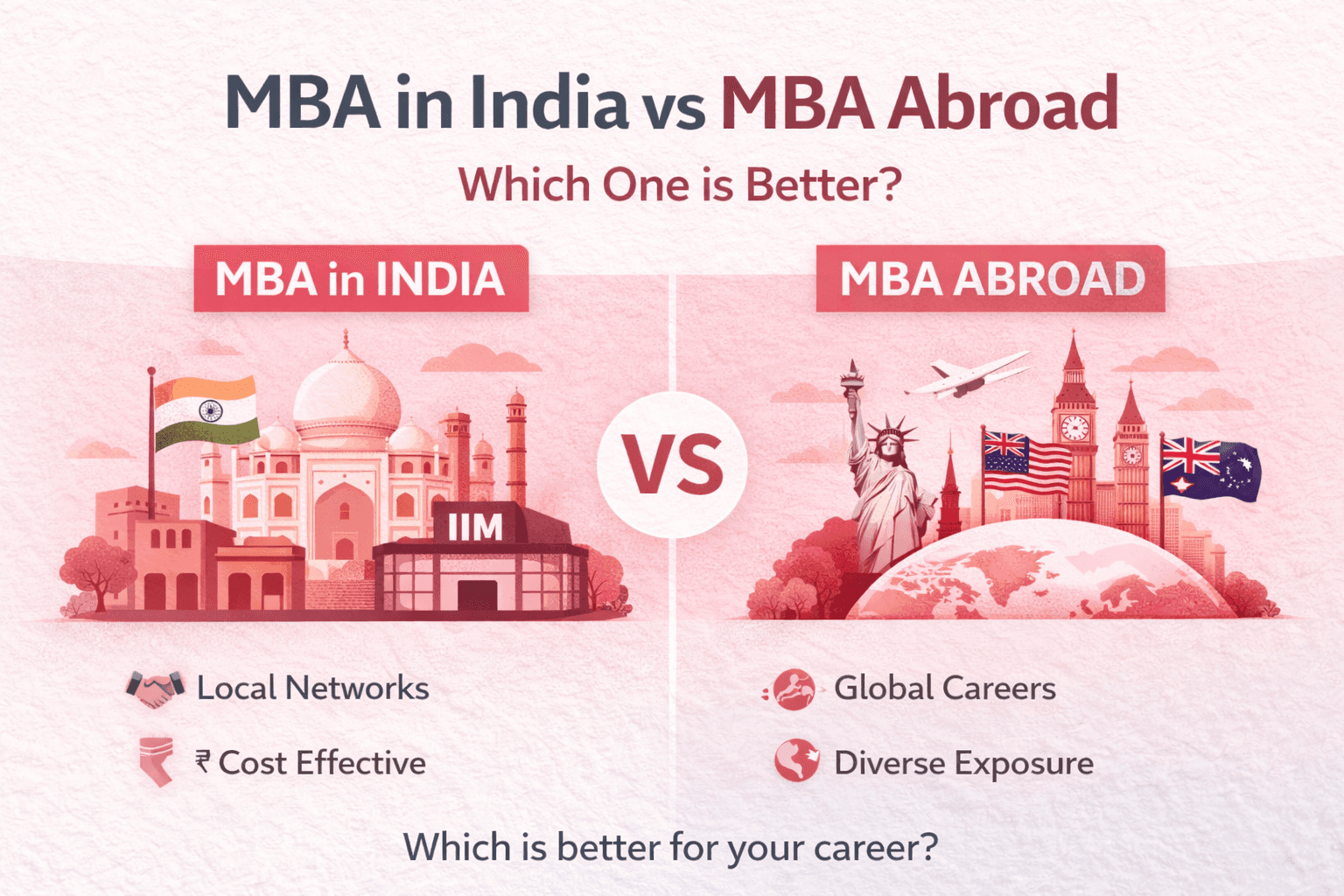
MBA Abroad vs MBA in India: A Data-Backed Comparison for Families
For many years, families have asked the same question:
“Is an MBA abroad worth it, or is an MBA in India the safer choice?”
The honest answer is: both can be right.
But they serve different outcomes, different career paths, and different kinds of students and most importantly it depends on personal choice and preferences. This is not a comparison of “which is better.” It is a question of fit, return, and long-term direction.
1) The Purpose of the MBA Matters
An MBA is not just a degree. It is a career accelerator and its value depends on what you want it to accelerate.
MBA in India Typically Works Better For:
Careers in India-focused roles (consulting, FMCG, banking)
Building strong domestic networks (IIMs, ISB ecosystems)
Cost-conscious decisions: Top Indian MBAs (like IIMs/ISB) report average fees of ₹15-20 lakhs and salaries of ₹25-35 LPA, with strong placement in the Indian markets.
MBA Abroad Typically Works Better For:
Global roles (consulting, tech, finance)
Geographic mobility (US, UK, Canada, Australia)
Exposure to international markets. Top global MBA programs report average salaries of $90,000–$150,000 (₹75L-₹1.2Cr) depending on country and role.
The difference is not just salary, it is where that salary is earned and what markets it opens.
2) Exposure Shapes Career Trajectory
One of the most underestimated differences is peer learning and global exposure.
In a typical international MBA classroom, you may study with:
Professionals from 10-40+ nationalities
Students with backgrounds in consulting, startups, family businesses, tech, and policy
Top global MBA programs often have 80–90% international student diversity
Why this matters:
Exposure to diverse thinking improves decision-making and leadership skills
Recruiters value candidates who can work in cross-cultural teams. Over a 20-30 year career, this becomes a compounding advantage
3) Return on Investment (ROI) Is More Than Salary
Families often evaluate ROI based on first job salary vs tuition cost.
Cost Comparison (Average):
🇮🇳 India MBA: ₹20-40 lakhs
🌍 Abroad MBA: ₹60 lakhs - ₹1.5+ crore
Salary Recovery Timeline:
India MBA: 1.5-3 years
Abroad MBA: 3-5 years (depending on country & job)
But is it important to note that ROI also includes:
Ability to work in multiple countries
Access to global companies (MBB, Big Tech, global banks)
Strong international alumni networks
Graduates from top global MBA programs often see 2-3x salary growth within 5-7 years, especially in consulting and tech. An international MBA increases your option value, not just your starting salary.
4) Employability Depends on More Than the Degree
A critical but often ignored reality: Not every student gets the “average salary” Especially abroad.
Factors That Impact Outcomes:
Prior work experience (most top MBAs require 2–5 years)
Communication skills
Networking ability
Internship performance
Visa policies & job market conditions
Reality Check:
Employment rates at top global MBAs: 85-95% within 3 months
But outcomes vary significantly based on student profile
It is important to note that the degree creates opportunity. The student converts it.
5) Maturity Is a Hidden Requirement
An MBA abroad is not just academically demanding, it is personally demanding.Students who succeed tend to have:
Adaptability in new environments
Financial awareness (budgeting, loans, living costs)
Emotional independence
Willingness to network actively
Students who struggle abroad are often not academically weak; they are unprepared for independence and uncertainty. The MBA does not create maturity. It amplifies what already exists.
6) The Real Question
The biggest mistake families make is asking: “Which MBA is better?” The better question is:
“Which path aligns with this student’s goals, budget, and readiness?”
An MBA abroad is not an escape from India. And an MBA in India is not a limitation. They are different pathways to success. Some students build exceptional careers within India’s ecosystem. Others unlock opportunities by stepping into global markets. Neither is superior.
One is simply more aligned.
If you’re unsure which path fits your profile, don’t rely on trends. Make a decision backed by clarity, data, and long-term thinking. Book a free 1-on-1 counselling session with GradGuide: 077387 11449
Talk to a GradGuide expert about your study-abroad plans.